With NVIDIA releasing its next-gen GPUs early this year, AMD wasn't far behind with its next-generation, the Radeon RX 9000 series, which is based on the RDNA 4 architecture. With these two giant GPU manufacturers offering next-gen GPUs to general consumers, there could be an influx of upgrades for those who have been using their previous-gen GPUs or for those just starting to get into the PC building scene.
Either way, the more options we have in the market, the better, as some GPU prices are far beyond reach for those with a limited budget. With AMD's new cards now available, it's fair to say that many gamers and PC builders will have an alternative to the NVIDIA 50 series cards.
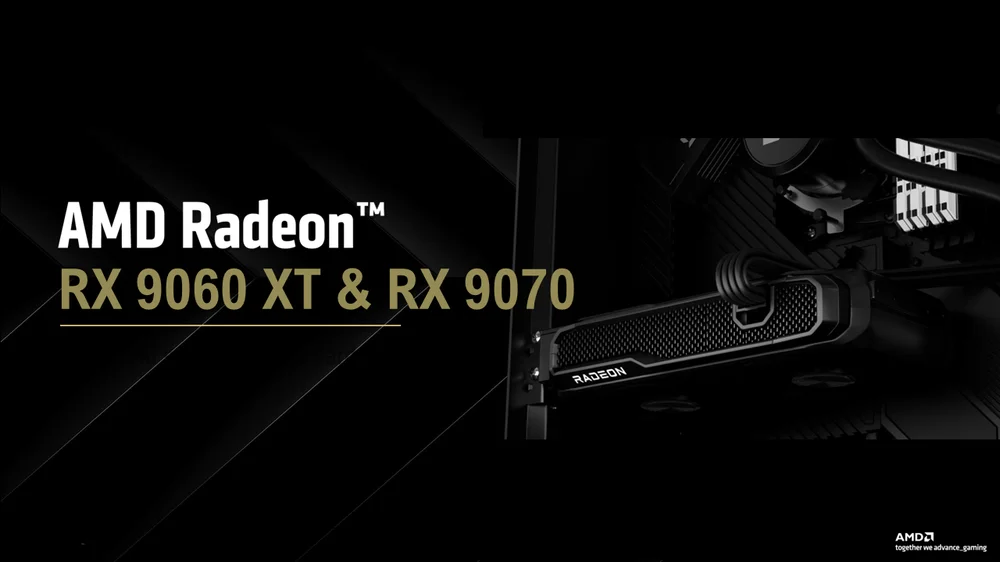
In this article, we will focus on AMD’s RX 9060 XT, which is aimed at mainstream consumers, and the RX 9070, which targets enthusiasts and high-performance gamers who primarily play at 1440p and 4K resolution. So, what are the differences between these two models? And what benefits does each model offer you?
RX 9060 XT vs RX 9070 Specs Compared
|
RX 9070 |
RX 9060 XT |
|
|
Stream Processors |
3584 |
2048 |
|
Base Clock (GHz) |
2.07 |
2.53 |
|
Boost Clock (GHz) |
2.52 |
3.13 |
|
AI Accelerators |
112 |
64 |
|
Memory |
16 GB |
8GB / 16GB |
|
Memory Type |
GDDR6 |
GDDR6 |
|
Memory Bus |
256-bit |
128-bit |
|
TBP (Total Board Power) |
220W |
160W (16GB) / 150W (8GB) |
|
Required System Power |
650W |
450W |
|
Power Connector |
2x 8-pin* |
1x 8-pin* |
|
PCIe Gen |
5.0 |
5.0 |
|
Display Outputs |
3x DP 2.1a, 1x HDMI 2.1 |
1x HDMI 2.1b, 2x DP 2.1a |
RX 9060 vs RX 9070: Video Outputs
There are several reasons why one might be interested in knowing the types of outputs the video card supports. For hardcore PC gamers, having an HDMI 2.1 and DisplayPort 1.4/2.0 is a must, as they prefer to play their games in high resolutions and faster refresh rates. Additionally, knowing the configuration of the GPU outputs allows you to figure out if your dual, triple, or even quadruple monitor setup will work.
|
GPU |
RX 9070 |
RX 9060 XT |
|
Outputs |
3x DP 2.1a, 1x HDMI 2.1 |
1x HDMI 2.1b, 2x DP 2.1a |
RX 9060 XT vs RX 9070: Performance
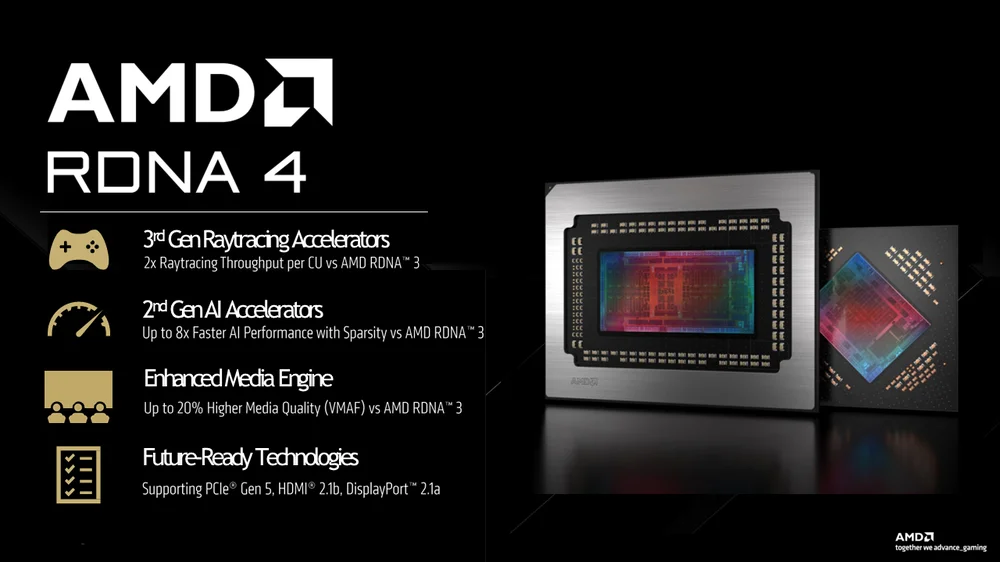
For starters, both cards are based on the AMD RDNA 4 architecture, utilizing a 4nm process node, which represents an upgrade from the 5nm and 6nm process nodes used by the RDNA3 chips. That said, the RX 9070 edges the RX 9060 XT in Stream Processors, boasting 3,584 cores compared to the RX 9060 XT’s 2,048, which translates to improved performance when handling multiple tasks simultaneously, resulting in a smoother gaming experience.
Regarding memory, both use GDDR6, but the RX 9070 features 16GB, which is the same as the 9060 XT 16GB variant, but double the amount of the RX 9060 XT 8GB variant. The more memory your GPU has, the better it can manage higher resolutions in gaming, significantly boosting performance for those engaged in video editing and 3D modelling.
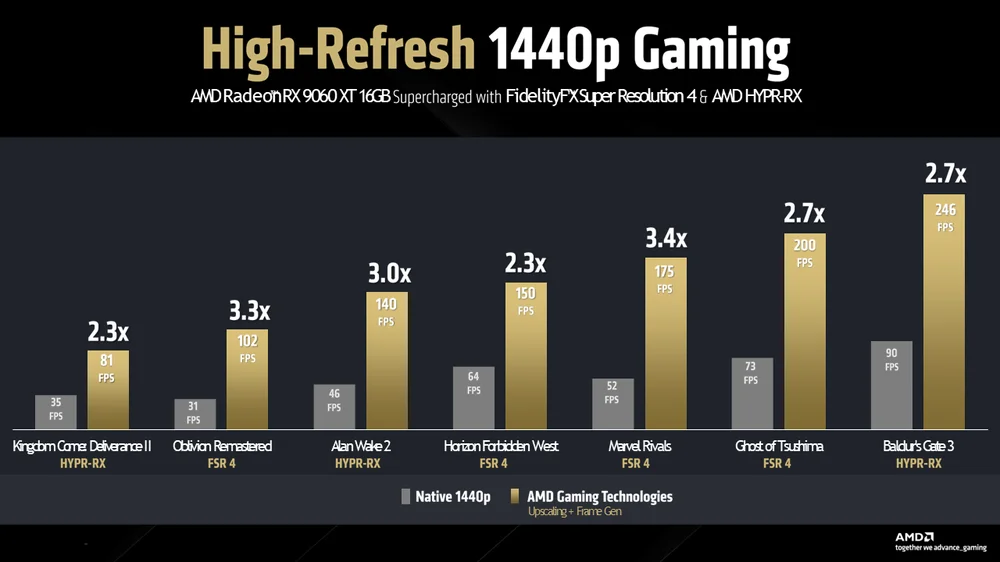
Game frequency is another spec that many PC enthusiasts and gamers consider when comparing video cards, as it influences the card's ability to execute instructions at any given moment. This directly impacts its overall performance in games by producing higher frame rates, particularly in high-resolution games where a large number of pixels must be processed quickly.
If you are a prosumer who engages in numerous 3D rendering or graphics-intensive applications, a higher core frequency helps manage complex graphics and rendering with greater detail. The RX 9070 took a backseat in this category, with a game frequency of 2,070 MHz, while the RX 9060 XT is spec'd at 2,530 MHz. It may not be by much, but it's enough to boost frame rates and enhance your gaming experience.
RX 9060 XT vs RX 9070: Power Requirements
Unlike the NVIDIA RTX 5090 and 5080 cards, the power requirements for the RX 9070 and 9060 XT are somewhat more manageable. This does not imply that these cards are subpar; rather, it indicates that they are power efficient, as they don’t consume as much power as the 50 series.
The RX 9070 is rated at 220W TBP (Total Board Power), while the RX 9060 XT is 160W for the 8GB and 150W for the 16GB. Additionally, it’s worth noting that these cards do not use the 12V-2x6 power connector; instead, they draw power from two 8-pin PCIe power connectors, which are quite common today. For the recommended power supply, a minimum of 650 watts is required for the RX 9070, while a PSU rated up to 450 watts is ideal for the RX 9060 XT.
The CORSAIR RMe and RMx SHIFT Series are the ones to go for here. The SHIFT PSUs, in particular, utilize side-mounted connections to simplify cable management.
PRODUCTS IN ARTICLE
JOIN OUR OFFICIAL CORSAIR COMMUNITIES
Join our official CORSAIR Communities! Whether you're new or old to PC Building, have questions about our products, or want to chat about the latest PC, tech, and gaming trends, our community is the place for you.