AI was a major highlight at CES 2026, showcasing everything from AI-powered wearable glasses to robot vacuums and smarter smartphones, all on full display. During the event, AMD made sure they were in the AI mix by highlighting that AI-driven gaming processors remain a priority and are essential for gamers to experience the true benefits of AI on their gaming PCs. They are pioneering smart gaming by integrating AI into their processors and platforms, resulting in faster, more efficient, smarter, and more adaptable systems. They envision these PCs doing more than just being super responsive - they designed these CPUs to think faster, react more intelligently, and better serve users for both work and entertainment.
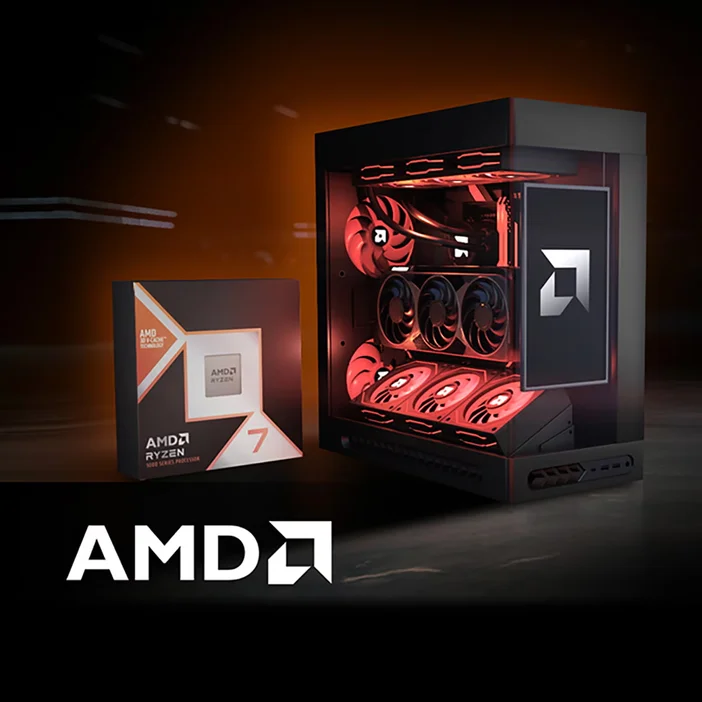
They announced two new gaming-grade CPUs: the Ryzen 7 9800X3D and the Ryzen 7 9850X3D. The Ryzen 7 9800X3D is positioned as the ideal choice for high-refresh gaming, leveraging AMD’s X3D technology, which adds significant cache that benefits key aspects of gaming, such as higher frame rates. In the same breath, the Ryzen 7 9850X3D maintains a similar design on the same platform, with the same core count and large cache, but is optimized for higher clock speeds.
So is it a real upgrade? We’ll go over the details in this article and find out. But if you’re building (or upgrading) a gaming PC, these are the specs that matter most:
AMD Ryzen 7 9850X3D vs AMD Ryzen 7 9800X3D: Specs Compared
| AMD Ryzen 9 9850X3D | AMD Ryzen 9 9800X3D | AMD Ryzen 7 7800X3D | |
| CPU Cores | 8 | 8 | 8 |
| Threads | 16 | 16 | 16 |
| Max. Boost Clock | 5.6 GHz | 5.2 GHz | 5.0 GHz |
| Base Clock | 4.7 GHz | 4.7 GHz | 4.2 GHz |
| Architecture | Zen 5, second-gen 3D V-Cache | Zen 5, second-gen 3D V-Cache | Zen 4, first-gen 3D V-Cache |
| L1 Cache | 640 KB | 640 KB | 512 KB |
| L2 Cache | 8 MB | 8 MB | 8 MB |
| L3 Cache | 96 MB | 96 MB | 96 MB |
| Default TDP | 120W | 120W | 120W |
| System Memory Type | DDR5 | DDR5 | DDR5 |
| Memory Channels | 2 | 2 | 2 |
| Max. Memory Capacity | 192 GB | 192 GB | 128 GB |
| Max Memory Speed | DDR5-5600 | DDR5-5600 | DDR5-5200 |
| ECC Support | Yes (Requires mobo support) | Yes (Requires mobo support) | Yes (Requires mobo support) |
Based on the specs above, the Ryzen 7 9850X3D, priced at $499, is essentially a higher-clocked Ryzen 7 9800X3D with an MSRP of $479: same 8-core X3D layout and 96MB L3 cache, but with a higher max boost clock (5.6GHz vs 5.2GHz) and a slightly higher price point.
AMD Ryzen 7 9850X3D vs AMD Ryzen 7 9800X3D: Performance
So, how much faster is the Ryzen 7 9850X3D compared to the Ryzen 7 9800X3D? On paper, these two CPUs are quite similar, so it’s best to set realistic expectations here. Based on data from various sources, even though the 9850X3D has only a slight edge (about 400 Hz in Max Boost), its overall performance shows an average increase of about 5% across different games at medium settings. This mostly helps when the CPU is the limiting factor, minimizing the GPU’s impact during gaming. When the GPU is the bottleneck, like at higher resolutions or settings, the difference can narrow quickly. What really caught our attention in those tests is that it outperformed the previous Ryzen 7 7800X3D by about 15%, which is quite impressive.

If you aim for 240Hz/360Hz in competitive games and have a capable GPU, the 9850X3D offers a noticeable yet subtle benefit. Consider it like the “same X3D advantage with a slightly higher possible performance ceiling,” particularly in games that benefit from higher frequency.
When playing games at higher settings, such as 1440p ultrawide and 4K, many modern titles are primarily GPU-bound, meaning both CPU models can deliver very similar real-world frame rates. In those scenarios, the difference may be hard to notice without thorough benchmarking.
This increasing performance trend not only showcases improvements in processing power but also establishes a new standard for gamers who want high-quality experiences, which the majority of them do appreciate, without sacrificing frame rates.
AMD Ryzen 7 9850X3D vs AMD Ryzen 7 9800X3D: Power and Cooling Considerations
From the table spec above, you can see that both CPUs are rated at 120W TDP (thermal design power), so you’re not really stepping into ‘space heater’ territory here. In real-world applications, a CPU with a higher boost speed, like the Ryzen 7 9850X3D, typically translates to slightly higher real-world power and thermals, especially under heavy load - nothing too dramatic to cause concern, but it’s always worth planning for.
A strong, efficient air cooler is enough to keep these CPUs’ temperatures in check. But why settle for an air cooler when there’s a plethora of AIO liquid CPU coolers on the market that are even more efficient and quieter, such as CORSAIR AIO coolers.
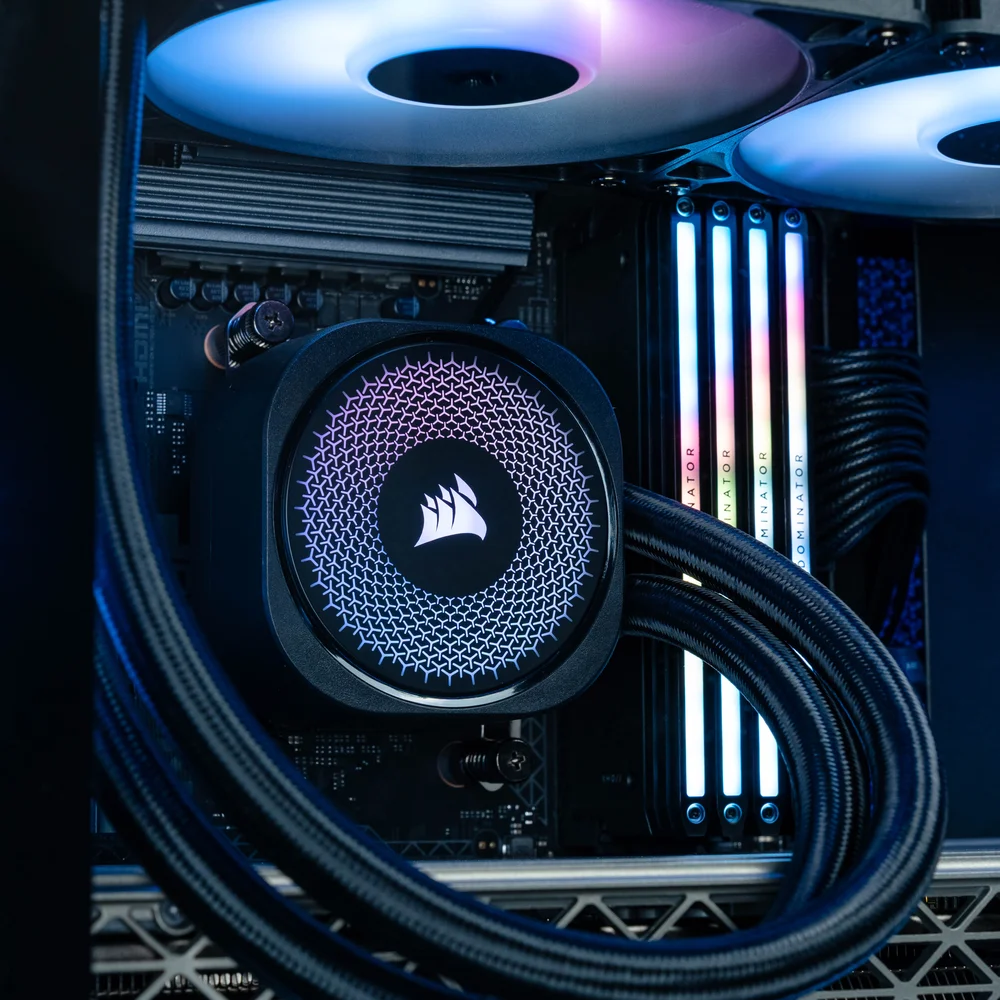
If you want quieter operation and more consistent cooling performance, a reliable 240mm or quality 360mm AIO makes it easy. A 360mm AIO cooler like iCUE LINK TITAN 360 RX for a premium, feature-forward build, or NAUTILUS 360 RS, which provides clean, simple, and effective cooling, without breaking the bank.
As for power consumption, we’re not going to split hairs here - both CPUs are rated at 120W TDP, so that the same PSU wattage can be used for both. That said, total system power consumption can vary based on the components used, such as the graphics card, storage devices, and cooling solutions. As a baseline, a power supply with at least 750 watts is recommended to provide ample headroom for overclocking and future upgrades, ensuring stability and efficiency during demanding tasks. Lucky for you, CORSAIR offers a wide variety of PSUs rated at 750W or higher.
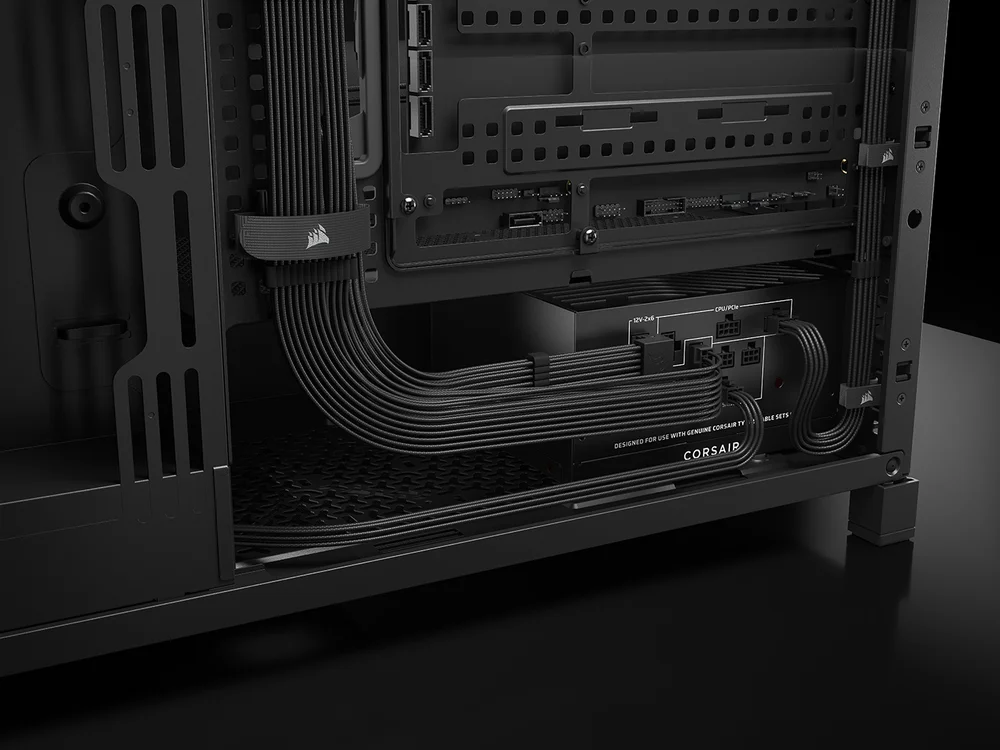
In addition to wattage, the power supply’s efficiency rating is crucial. Look for models certified 80 PLUS Gold or Platinum, as these ratings indicate higher energy efficiency and lower heat output. This means a more stable power supply and savings on electricity bills in the long run. Plus, most CORSAIR PSUs are ATX 3.1 compliant and support PCIe 5.1, making them perfect for the latest GPUs, like the NVIDIA 50 series.
PRODUCTS IN ARTICLE
JOIN OUR OFFICIAL CORSAIR COMMUNITIES
Join our official CORSAIR Communities! Whether you're new or old to PC Building, have questions about our products, or want to chat about the latest PC, tech, and gaming trends, our community is the place for you.