BLOG
What is Ping in Online Gaming?
In gaming, some say that speed is everything and the enemy of speed is lag, which can be extremely annoying and a nuisance. A common cause of lag is a high ping, but what is ping? Let's take a look.

What is Ping?
The term ping typically refers to the time – measured in milliseconds (ms) – it takes for an input signal to travel from a user’s device, to the game server and back to the original device. The total time may also be referred to as latency and is often used interchangeably by gamers.
In more technical terms, ping is the action of sending out a signal, while latency is the measured round-trip time. In this article, the definition of ping will reflect what is commonly known in the gaming community.
Check out this other article that explores deeper into the nuances of both terms if you are interested in learning more.
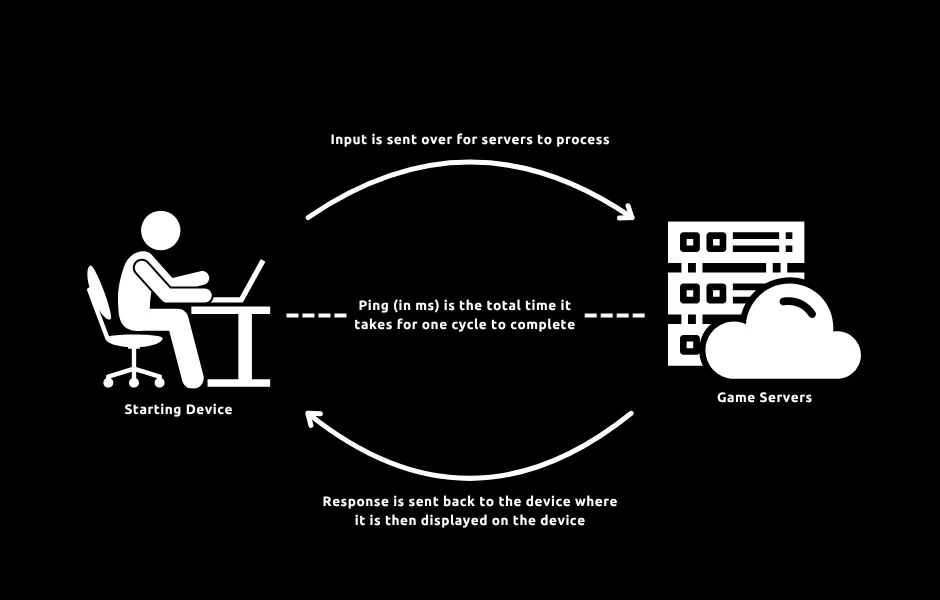
Let’s use an FPS (First-Person Shooter) game situation as an example to visualize how ping works.
- When you perform an action, such as pressing the W key or clicking the mouse to shoot, that input gets sent from your computer to the game server.
- The game server then processes that information and sends a response back. As an example, this would be confirming your shot or updating your position in the game.
- Your computer receives the information and displays the result on the screen.
The time it takes for steps 1-3 to occur is your ping.
How Does Ping Affect In-game Performance?
In most online games, especially FPS games like Counter-Strike, Call of Duty, or Valorant, ping can make or break your gaming experience.
Let’s bring back the FPS example to compare what happens when two players shoot at the same time with differing pings.
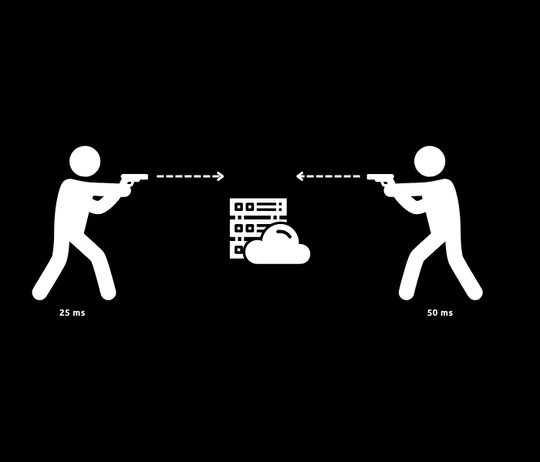
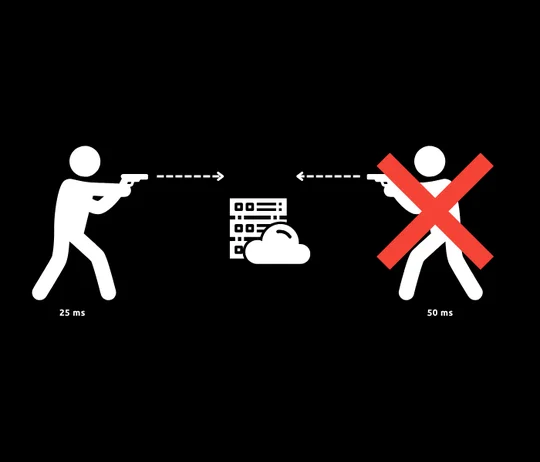
Image A
Image B
- Both players will shoot at the same time at 0ms. Notice their differing ping speeds (Image A).
- Because the left player is experiencing a lower ping speed, the shot is sent and processed first by the server.
- The server sends back to the two players confirming the right player has been hit and eliminated (Image B). At the same time, the right player's shot is not registered as the server already confirms they are eliminated. In this case, the left player is at an advantage due to their lower ping speed.
Generally, the lower the ping the better the performance as actions are accurately displayed in real time. Low ping contributes to a smoother, more responsive gaming experience.
Why is my Ping so High?
While there can be hundreds of factors that can contribute to high ping, the list below compiles some of the most common reasons as to why it might be happening
- Physical Distance from the Gaming Server: Depending on where you setup is located and where the gaming server is, ping will differ. The closer you are to the server, the lower your ping gets and vice versa.
- Network Traffic: The number of devices and applications running on your network can interfere with your ping. Multiple devices on the same network that are streaming, loading, or downloading can cause slow ping.
- WIFI vs Ethernet: Generally, ethernet connections will reduce ping and provide a more stable performance compared to WIFI connections
JOIN OUR OFFICIAL CORSAIR COMMUNITIES
Join our official CORSAIR Communities! Whether you're new or old to PC Building, have questions about our products, or want to chat the latest PC, tech, and gaming trends, our community is the place for you.