With PC case modularity becoming a core feature in recent years, and likely to continue in the future, CORSAIR has released two cases that truly define what a modular PC case is: the FRAME 4000D and FRAME 5000D.
Both maintain the same premium build quality and high performance that CORSAIR is known for, while offering all the benefits of modularity. However, there are a few key differences, so. let's compare the two models to determine which one is best suited for your next build.
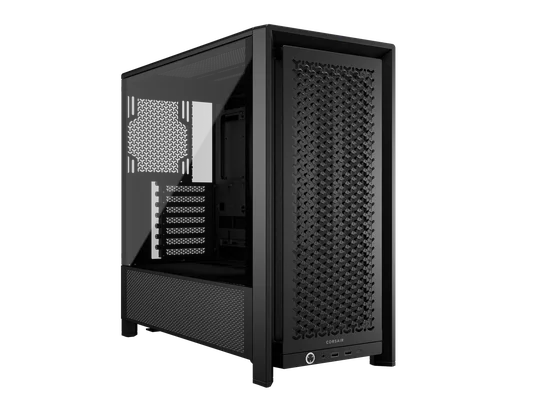
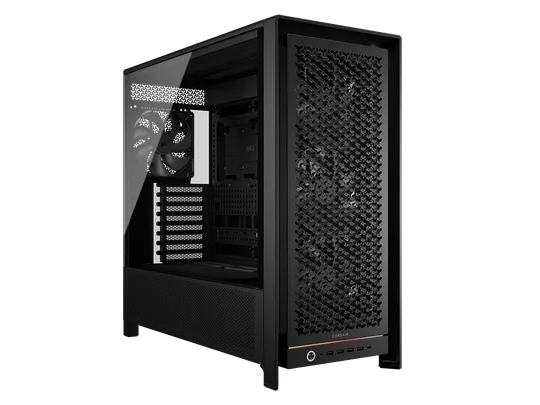
CORSAIR FRAME 4000D vs FRAME 5000D: Specs Compared
| FRAME 4000D | FRAME 5000D | |
| Dimensions | 487 x 239 x 486 mm | 556 x 250 x 542 mm |
| Reverse Motherboard Compatibility |
✔ |
✔ |
| Panels, MB Tray, Front I/O Customization |
✔ |
✔ |
| RapidRoute 2.0 |
- |
✔ |
| Maximum GPU Length | 430mm | 450mm |
| Expansion Slots | 7 Horizontal (4 Vertical) | 8 Horizontal (3 Vertical) |
| Front I/O | 2x USB 3.2 Gen1 Type-A, 1x USB 3.2 Gen2 Type-C, 1x 3.5mm Headphone/Microphone, Power, Reset | 4x USB 3.2 Gen1 Type-A, 1x USB 3.2 Gen2 Type-C, 1x 3.5mm Headphone/Microphone, Power |
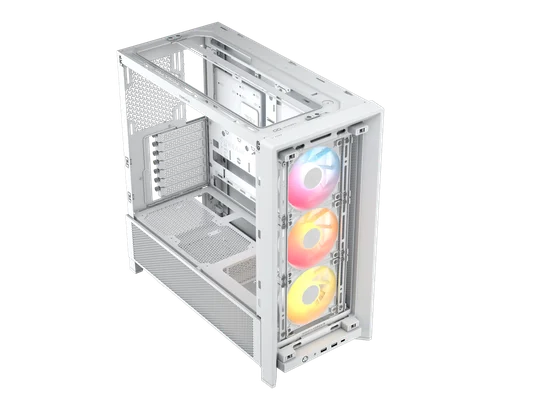
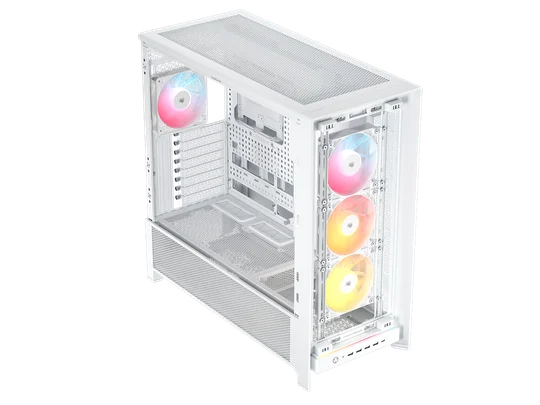
CORSAIR FRAME 4000D vs FRAME 5000D: Fan Compatibility
Of course, both cases have variants with fans included, but if you're curious about maxing these cases out, or have a preference for 120mm or 140mm fans, here's the full fan capacities for the FRAME 4000D and FRAME 5000D.
| FRAME 4000D | FRAME 5000D | |
| Fan Compatibility (Front) | 3x 120mm, 2x 140mm, 2x 200mm | 3x 120mm, 3x 140mm, 2x 200mm |
| Fan Compatibility (Top) | 3x 120mm, 2x 140mm, 2x 160mm |
3x 120mm, 3x 140mm |
| Fan Compatibility (Side) | 3x 120mm, 2x 140mm | 3x 120mm, 3x 140mm |
| Fan Compatibility (Bottom) | None | 2x 120mm, 2x 140mm |
| Fan Compatibility (Rear) | 1x 120mm, 1x 140mm | 1x 120mm, 1x 140mm |
| Fan Compatibility (PSU Shroud) | 2x 120mm | 2x 120mm |
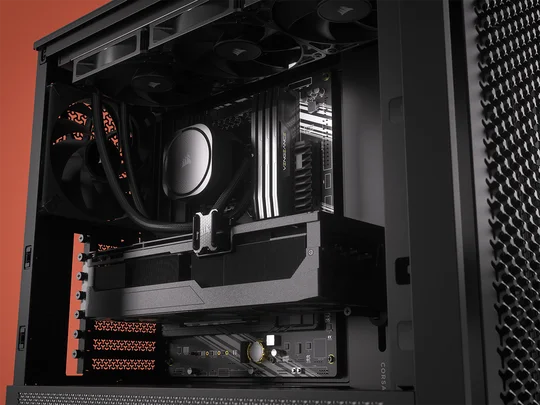
FRAME 4000D with a NAUTILUS 360 RS AIO
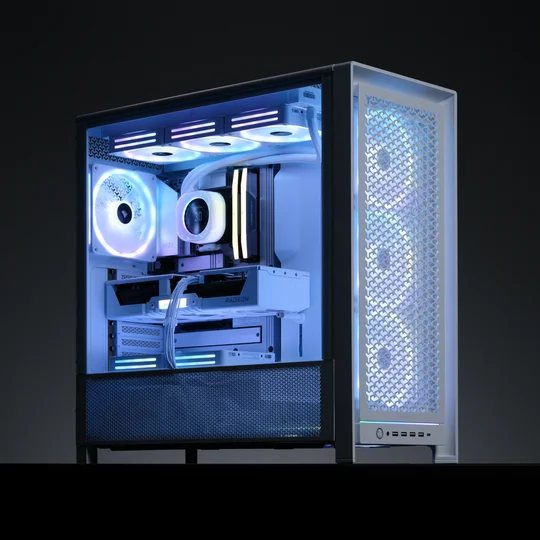
FRAME 5000D with an iCUE LINK H150i AIO
CORSAIR FRAME 4000D vs FRAME 5000D: Radiator Compatibility
Those who prefer an AIO cooler, or like to go further with a full custom water cooling setup will find both of these cases comprehensive in this regard. Check the radiator compatibility below.
| FRAME 4000D | FRAME 5000D | |
| Radiator Compatibility (Front) | 360mm, 280mm, 240mm | 360mm, 280mm, 240mm |
| Radiator Compatibility (Top) | 360mm, 280mm, 240mm | 420mm, 360mm, 280mm, 240mm |
| Radiator Compatibility (Side) | 360mm, 280mm, 240mm | 360mm, 280mm, 240mm |
| Radiator Compatibility (Bottom) | N/A | N/A |
| Radiator Compatibility (Rear) | 120mm, 140mm | 120mm, 140mm |
| Radiator Compatibility (PSU Shroud) | N/A | N/A |
CORSAIR FRAME 4000D vs FRAME 5000D: Size Compared
Both the FRAME 4000D and 5000D are classified as mid-tower cases according to industry-standard specifications. However, as shown in the image below, there is a noticeable difference in their physical sizes.
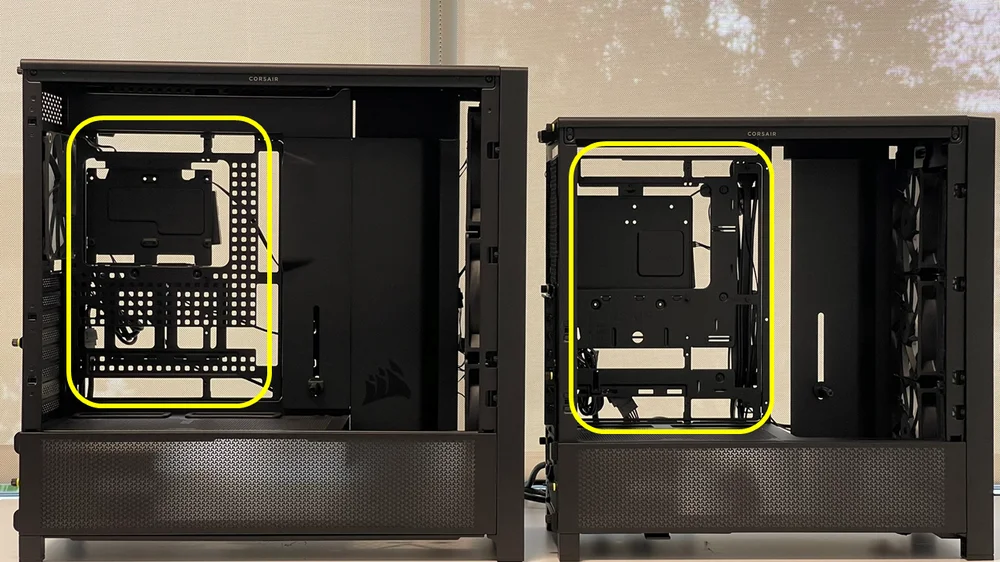
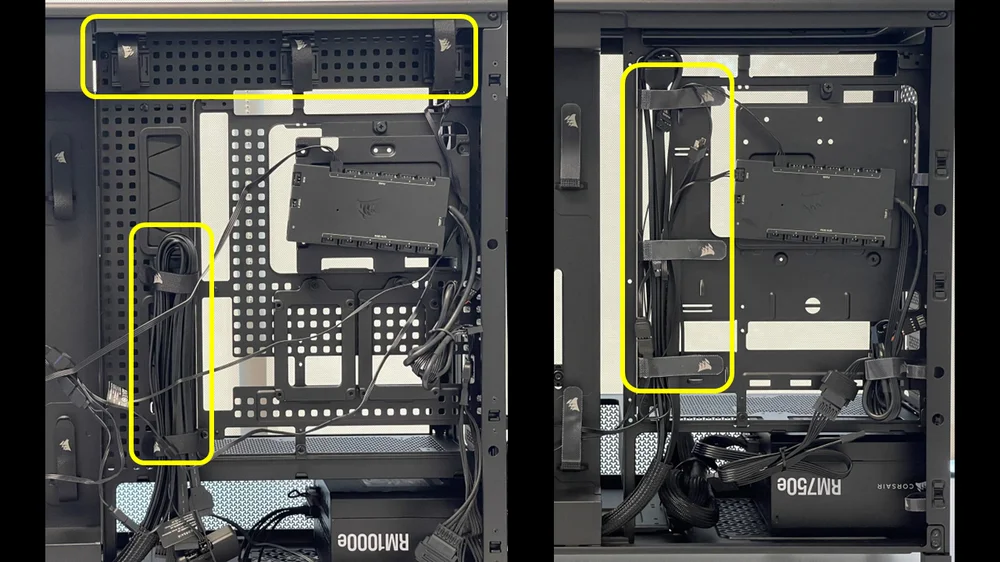
In addition to the size difference, you will notice that the FRAME 5000D motherboard tray features CORSAIR’s first modular pegboard design, marking the debut of the RapidRoute 2.0 cable management system. This new design aims to simplify cable management, enabling PC builders to position cable straps precisely where they want them.
Fan and Storage Support
With the FRAME 5000D being larger than its smaller sibling, the FRAME 4000D, case fans and storage options are another area where the FRAME 5000D has an advantage over the FRAME 4000D, especially in supporting 140mm fans. You can also fit more SSDs in the FRAME 5000D compared to the FRAME 4000D, allowing users to add more storage to their build.
|
|
FRAME 4000D |
FRAME 5000D |
|
140mm Fan Support |
7 |
10 |
|
SSD Support |
4 |
6 |
Aesthetics and Functionality
Both the FRAME 5000D and FRAME 4000D share the same DNA and design language. However, since the FRAME 5000D falls into the premium PC case category while the FRAME 4000D is considered more mainstream, CORSAIR added some cool features that add great value to the FRAME 5000D.
This is not to say that the FRAME 4000D is far behind the FRAME 5000D. In fact, given the FRAME 4000D’s price, it is not only very competitive but also loaded with many great features compared to other cases in the same price segment. That said, it’s hard to ignore some features of the FRAME 5000D that the FRAME 4000D lacks.
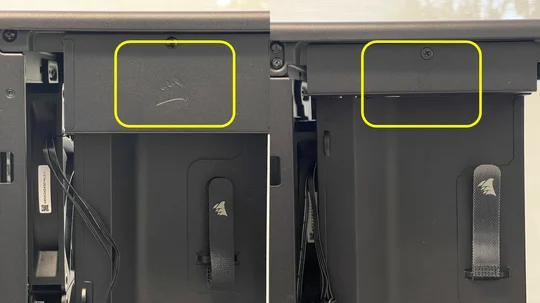
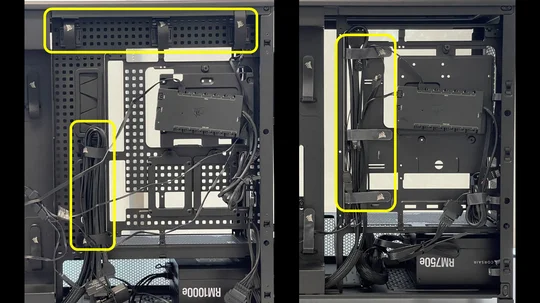
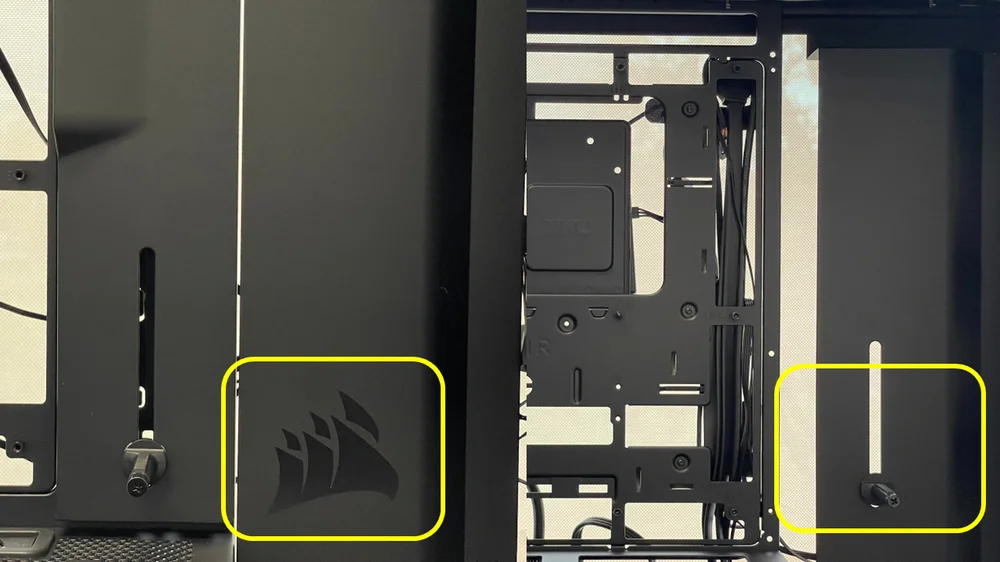
While both cases include a GPU anti-sag stabilization arm to support larger and heavier modern video cards, the FRAME 5000D has it built into the case, whereas the FRAME 4000D's arm is removable, meaning you will need to move it to the internal side panel if you use an E-ATX motherboard.
For a cleaner look, the FRAME 5000D has rubber grommets added to the PSU cage, giving your build a much neater appearance with all the cables from the front I/O panel neatly tucked in place. However, note that this is only applicable if you have a motherboard without a reverse connection.
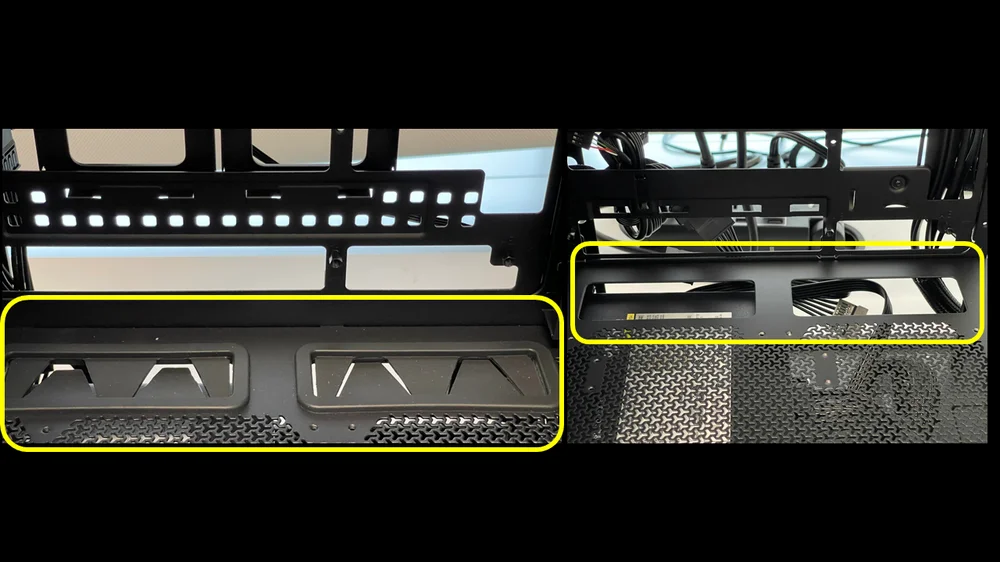
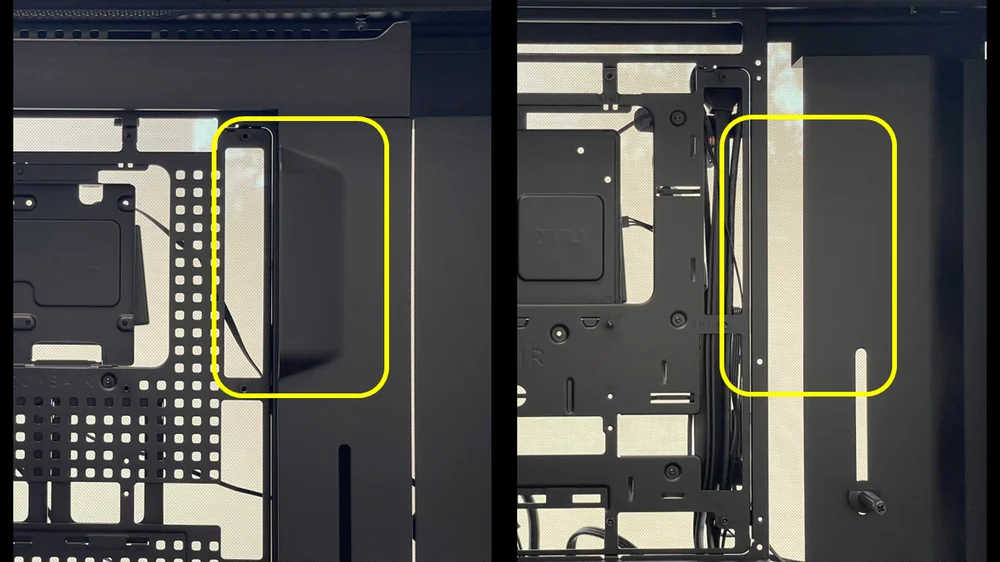
There is also a cable route on the internal side panel of the FRAME 5000D, offering extra space for your 24-pin cable and any additional front I/O for those who have not yet upgraded to reverse-connection motherboards.
Apart from the differences mentioned, the FRAME 4000D and FRAME 5000 resemble each other more in appearance and function than they differ. Essentially, CORSAIR retained the same design language and DNA makeup of the FRAME 4000D, enlarging it and adding some updated features and tweaks to elevate the FRAME 5000D as a more premium PC case.
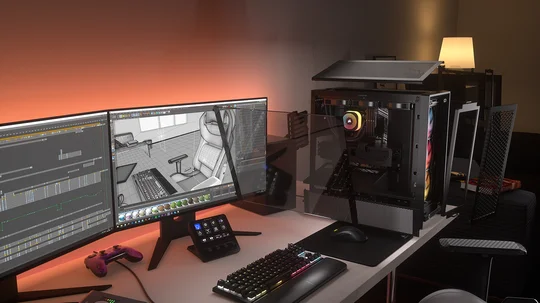
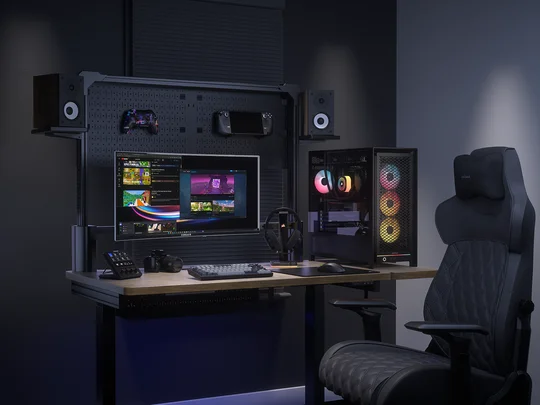
The core features of the FRAME Series cases are highlighted on both models, such as the innovative modular system that allows users to customize their case, which can be personalized and grow with their needs or mood. Both cases also share the InfiniRail Mounting System, providing flexibility for configuring front and roof fans—a very convenient feature that other PC cases lack.
Ultimately, both cases are excellent choices. They suit various PC builds, whether prioritizing performance or aesthetics, offering impressive functionality. The FRAME 4000D and FRAME 5000D cover all the essentials for a well-rounded PC system.
PRODUKTY V ČLÁNKU
JOIN OUR OFFICIAL CORSAIR COMMUNITIES
Join our official CORSAIR Communities! Whether you're new or old to PC Building, have questions about our products, or want to chat about the latest PC, tech, and gaming trends, our community is the place for you.