BLOG
Are AMD Threadripper CPUs Good for Gaming?
There’s no question that AMD’s Threadripper CPUs are immensely powerful. It’s their very reason for being after all. As the slightly over-the-top name implies, these chips have been designed to offer ridiculous levels of raw power and indeed rip their way through plenty of threads. With the likes of the Ryzen Threadripper™ PRO 9995WX available with no less than 96-cores capable of handling a massive 192 threads, this really is a monstrous chip.
To put some context behind those core counts, a quick scan down AMD’s latest desktop processor lineup reveals that its Ryzen 9000 Series is available with anything from 6-cores and 12-threads for the AMD Ryzen 5 9600X all the way up to the 16-core, 32-thread Ryzen 9 9950X3D. Intel’s desktop chips, meanwhile, are available with up to 24-cores and 24-threads as well.
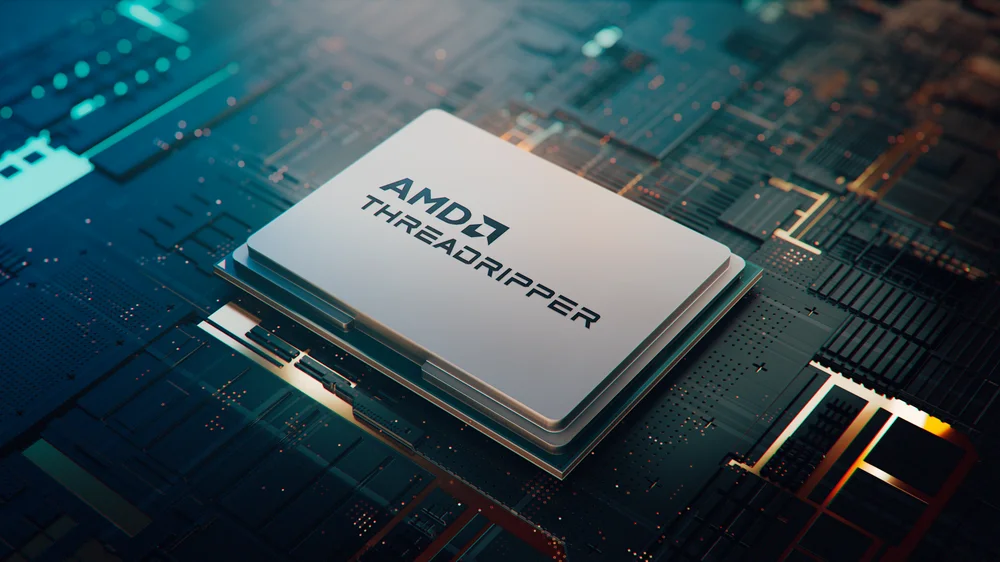
Good Game Threadripper?
Surely this is a slam dunk for Threadripper when it comes to gaming then? Not quite. You see while high core counts are important for some applications, such as video editing, rendering, and serious number crunching, other types of software are not so bothered about core counts and are more affected by clock speeds. And, in case you haven’t seen where this is going, gaming generally falls into the latter category. There are exceptions, but for the most part games are designed to run on fewer, but faster cores.
Which brings us onto Threadripper’s clock speeds, which aren’t exactly slow, but the complex nature of these chips means that they can’t quite compete with the top gaming-focused offerings. The table below, comparing the top Threadripper to the best gaming chip around right now, the Ryzen 7 9800X3D, shows the disparity in base clocks. It’s worth noting that while the Max Boost Clock looks comparable, the processor doesn’t sit at that speed for long.
Threadripper also supports more PCIe lanes and higher memory bandwidth, ideal for multi-GPU setups, fast storage arrays, and memory-intensive tasks. These features are valuable for creators and professionals, but they don’t translate into better frame rates for most games.
Threadripper systems require robust cooling and high-wattage power supplies, which adds to the overall build cost and complexity. This is another consideration for DIY builders weighing performance against practicality.
| CPU | Cores / Threads | Base Clock | Max Boost | TDP | Target Use |
| Threadripper PRO 9995WX | 96 / 192 | 2.5 GHz | 5.4 GHz | 350 W | Workstation |
| Ryzen 7 9800X3D | 8 / 16 | 4.7 GHz | 5.2 GHz | 120 W | Gaming |
It’s worth stating that graphics cards have a much bigger impact on gaming than the CPU does, which brings us onto one of the main considerations when building a gaming PC these days, namely value for money. Threadripper actually offers great value compared to the workstation-class alternatives, but that’s not the case when it comes to pure gaming systems.
Building a cutting-edge gaming machine can be an expensive endeavour, with the likes of the Nvidia RTX 5080 sitting at around $1,000 and then RTX 5090 at double that. Assuming you can even find them. Then there’s the motherboard, memory, storage, etc. to think about as well. If you want a high-performance gaming PC, then the processor we’ve already mentioned, the Ryzen 7 9800X3D is the slice of silicon you should be dreaming about, not Threadripper.

Who is Threadripper for?
When the Threadripper family was first announced, it was awesome news for a section of the community that had been forced at the point to use far more expensive workstation processors in even more expensive workstations. Systems that weren’t great at gaming, because reliability and compatibility were far more important. With the launch of Threadripper, there was suddenly a processor family that offered workstation levels of performance but at a fraction of the price. And all while using a tried and tested desktop architecture.
That’s not quite how it all played out to be fair and given Ryzen was new at the time as well, there were plenty of teething problems with the first slew of Threadripper chips, especially when it came to memory support. AMD has dabbled with making Threadripper only available through OEMs, and even for the latest Threadripper PRO 9000 WX-series chips, that’s still what it recommends, with the non-PRO Threadripper 9000 options aimed more at DIY builders.
Things have improved over time though, and if you’re a gamer than also needs raw processing grunt, then a single system that can do it all makes sense. This is where Threadripper really makes most sense. Threadripper isn’t built for pure gamers. It’s for creators, streamers, and professionals who also game. If your workflow includes rendering, editing, or simulation alongside gaming, Threadripper offers incredible versatility.
JOIN OUR OFFICIAL CORSAIR COMMUNITIES
Join our official CORSAIR Communities! Whether you're new or old to PC Building, have questions about our products, or want to chat the latest PC, tech, and gaming trends, our community is the place for you.