BLOG
SSI-EEB and CEB Motherboards Explained
Ever wondered what those mysterious "SSI-EEB" and "SSI-CEB" labels mean on some motherboards? If you've been shopping for server or workstation motherboards and encountered these terms, you're not alone in feeling confused. These aren't just marketing buzzwords, they're actual standardized form factors that define specific motherboard sizes and mounting configurations.
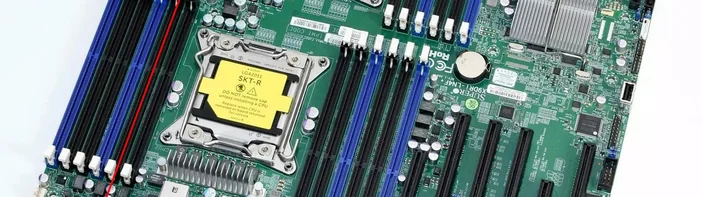
Image from level1tech forum
What are SSI‑EEB and SSI‑CEB?
- SSI‑EEB (Enterprise Electronics Bay): A board “stretched” to 305 × 330 mm (12 × 13”). It’s the mechanical baseline for many dual‑socket workstation/server motherboards. The SSI spec even notes this 12 × 13 size is sometimes called “extended ATX” or “full ATX.”
- SSI‑CEB (Compact Electronics Bay): A 305 × 266.7 mm (12 × 10.5”) board size. It’s essentially a shorter‑depth subset of EEB aimed at “value” segments and shorter‑depth chassis that borrow more from consumer cases.
How do they compare to ATX/E‑ATX?
|
Form factor |
Dimensions (W × D) |
What to know |
|---|---|---|
|
ATX |
305 × 244 mm (12 × 9.6”) |
The mainstream desktop standard. |
|
SSI‑CEB |
305 × 266.7 mm (12 × 10.5”) |
Shares the ATX I/O area and many mounting holes, so it can often work in ATX‑friendly chassis but check your case. |
|
SSI‑EEB |
305 × 330 mm (12 × 13”) |
Larger than ATX. Mounting hole pattern isn’t the same as ATX, despite similar width. |
|
“E‑ATX” (consumer) |
Varies |
“E‑ATX” isn’t a strict standard in consumer land; size and hole patterns vary by brand. Don’t assume E‑ATX support means SSI‑EEB support. |
Why would you choose one?
- Go SSI‑EEB if you need dual‑socket platforms, lots of RAM slots, and more PCIe connectivity typical of high‑end workstation or server roles. That’s exactly the class of systems the EEB spec targets.
- Go SSI‑CEB if you want many of the same platform capabilities in a board that’s friendlier to shorter‑depth, desktop‑style chassis (and often cheaper cases). The spec calls out CEB for “value” segments and shorter‑depth builds.
Will SSI-EEB and CEB Motherboards Fit in My Case?
The short answer: Maybe... verify explicitly.
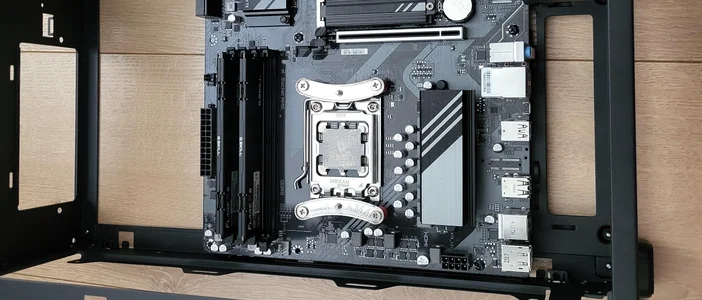
- CEB in ATX cases: Because CEB retains the ATX‑style I/O cutout and many of the same mounting holes, a lot of ATX/E‑ATX towers can accommodate CEB without drama. Still, compatibility isn’t automatic,confirm your case’s spec sheet.
- EEB in “E‑ATX” cases: Even though EEB’s 12 × 13” size is sometimes marketed as “E‑ATX,” the standoff pattern differs from ATX, and “E‑ATX” is not standardized in consumer marketing. Look for cases that explicitly list SSI‑EEB.
- Real‑world examples: Manufacturers do call out SSI‑EEB support e.g., in product documentation show SSI‑EEB use.
Tip: The SSI spec defines alternate mounting points (e.g., near the I/O area) in addition to “legacy” ATX holes. Some consumer cases omit these, which is why an EEB board might not be secure even if it seems to “fit.”
Other build considerations
- Power connectors: These boards usually use a standard 24‑pin ATX main power plus one or more EPS12V CPU connectors (varies by board). Check your motherboard manual.
- Cooling & clearance: Dual‑socket designs and dense DIMM banks can crowd cooler mounts; ensure your case’s top/front clearances and airflow plan are up to the task.
- I/O shields & slots: CEB keeps the ATX‑style rear I/O aperture; EEB is also ATX‑style in aperture width but don’t assume hole patterns or standoff count match your case. You need to verify.
Is SSI‑EEB the same as E‑ATX?
Not necessarily. The EEB spec’s max 12 × 13” board is sometimes referred to as “extended ATX” or “full ATX,” but consumer “E‑ATX” is not a strict standard and mounting patterns can differ. Check for SSI‑EEB support by name.
Will an SSI‑CEB board work in my ATX case?
Often yes CEB leverages the ATX rear I/O area and many of the same standoffs but always verify your case’s motherboard compatibility list.
Where did these standards come from?
They’re defined by the Server System Infrastructure (SSI) Forum; the current EEB document (covering EEB and its CEB subset) targets dual‑socket servers/workstations and spells out sizes, standoffs, and height limits.
JOIN OUR OFFICIAL CORSAIR COMMUNITIES
Join our official CORSAIR Communities! Whether you're new or old to PC Building, have questions about our products, or want to chat the latest PC, tech, and gaming trends, our community is the place for you.