AMD’s Ryzen Threadripper 9000 Series processors are here, setting the bar incredibly high for professional workloads. But with the top Threadripper PRO 9995WX retailing for $11,699 for the CPU alone, many users are left wondering: is it worth shifting to Threadripper, or should you stick with high-end consumer desktop chips like Ryzen 9?
We’re here to help you make that decision.
Below, we’ve split the chips into categories that make the most sense for anyone building or buying a next-gen AMD system, whether that’s Threadripper PRO, Threadripper or mainstream Ryzen. We’ve focused on high-end chips for serious workloads, but also touch on more affordable options where relevant.
This isn’t an exhaustive breakdown of every AMD CPU. Instead, it’s a guide to help you take the first step in choosing the right system for your workloads, and maybe even consider Threadripper if you hadn’t before. Or, it might confirm that the latest mainstream Ryzen chips are all you really need.
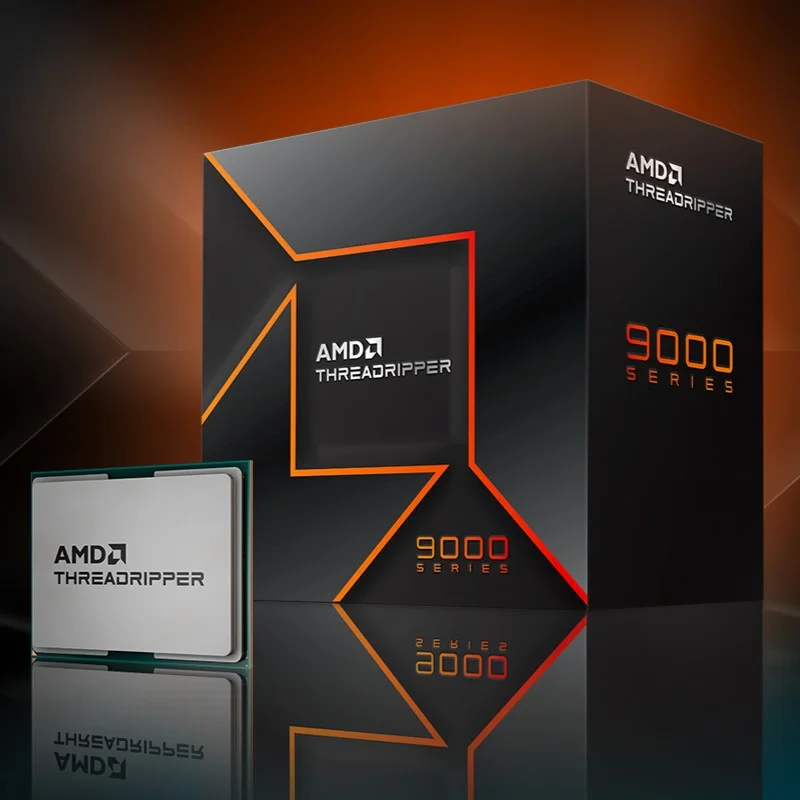
What is AMD Ryzen Threadripper?
AMD Ryzen Threadripper 9000 is the latest family of high-core-count processors built for demanding workloads like 3D rendering, video editing, and AI training. These chips offer significantly more cores and threads than mainstream Ryzen CPUs, along with support for high-capacity, high-bandwidth memory kits.
Threadripper PRO models are aimed at enterprise professionals. AMD recommends purchasing them pre-installed in workstations, although they are available at retail through third-party resellers. You cannot buy them directly from AMD. The non-PRO versions, however, are available for direct purchase, as will as being readily available at retail. Here's a breakdown of the differences between Threadripper and Threadripper PRO. Threadripper is ideal for users who need extreme multi-threaded performance and are willing to invest in a platform that supports it.
Best AMD CPU for Gaming
Games traditionally benefit more from clock speeds than core counts. While modern titles are improving in their support multi-threading, most are still optimized for four-to-eight cores at most. The unpredictable nature of gaming workloads makes it hard to utilize more cores without a major change in how many games engines work.
Threadripper’s massive core counts and relatively lower operating frequencies don’t offer much advantage here. That’s not to say Threadripper is bad for gaming, early issues have been resolved, and it’s capable enough. But it’s not the best choice if gaming is your primary goal.
For cutting-edge gaming with some workstation capability, the standout chip is the AMD Ryzen 7 9800X3D. It packs eight cores and 16 threads, with a base clock of 4.7GHz and a Max Boost Clock of 5.2GHz. The “X3D” suffix means it has a massive 96MB of L3 cache too, which helps accelerate many games.
If you need more raw power for non-gaming tasks, the Ryzen 9 9950X3D and 9900X3D are worth considering. Both offer the same 96MB of L3 cache, with 16-core and 12-core configurations respectively.
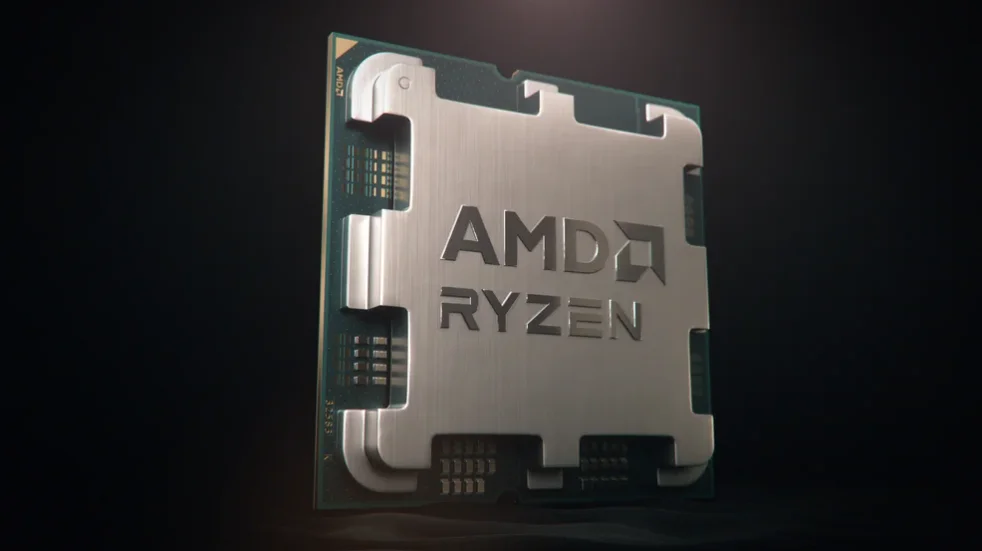
Best AMD CPU for Workstation Applications
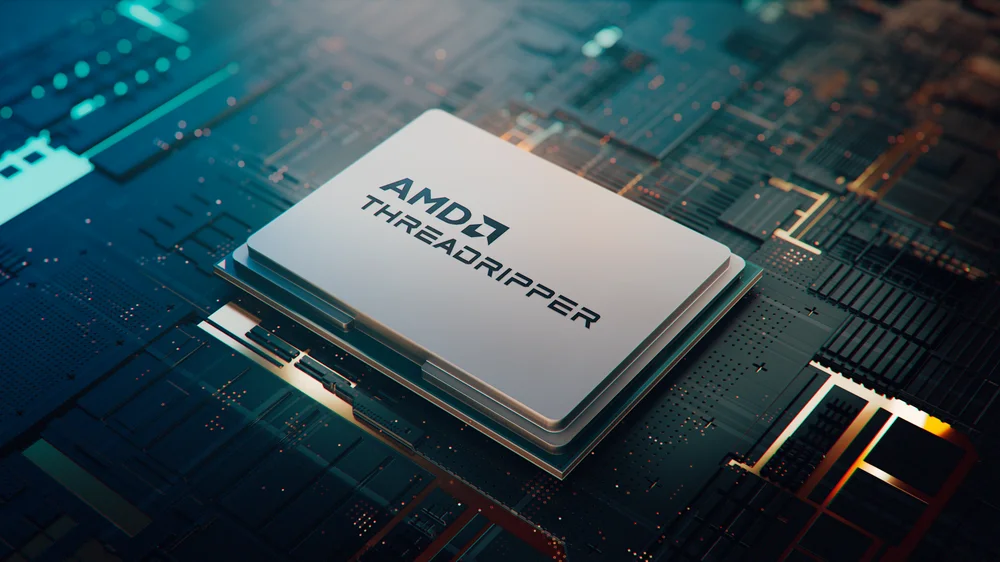
Workstation tasks vary widely, from 3D rendering and video editing to simulation, encoding, code compiling, and AI training. These workloads benefit from high core counts, large memory pools, and fast interconnects. This is where AMD’s Threadripper lineup shines. The latest Threadripper PRO 9000 Series supports up to 96 cores and 192 threads, along with up to 2TB of DDR5 memory at 6,400 MT/s. That kind of spec is unmatched by any consumer desktop chip and makes Threadripper ideal for professionals who need to process large datasets, run parallel workloads, or handle complex multi-threaded applications.
The difference in performance becomes especially clear in compute-bound tasks. Rendering engines like Blender and V-Ray scale well with additional cores, and Threadripper’s architecture is built to handle these efficiently. Video editors working with 8K footage or multi-layer timelines will also benefit from the extra threads and memory bandwidth. For AI developers, the ability to pair Threadripper with large amounts of RAM and multiple GPUs makes it a strong choice for training models locally.
That said, Ryzen 9000 chips still hold their own for lighter workstation use. The Ryzen 9 9950X3D, for example, offers 16 cores and 32 threads, which is plenty for most creators, editors, and developers. These chips also benefit from higher clock speeds and lower platform costs, making them a smart choice for users who need strong performance without the overhead of a workstation-class build. If your workflow includes gaming alongside creative tasks, Ryzen 9000 offers a more balanced solution. But if time is money and your workload demands it, Threadripper is the clear winner.
Best AMD CPU for Value
Whether you’re a professional or a budding amateur, budget matters. Both Threadripper and Ryzen 9000 offer a range of options across clock speeds and core counts. A comparison table helps here (US pricing shown for simplicity):
| CPU Model | Cores | Threads | Base Clock | Boost Clock | L3 Cache | Price |
| Threadripper PRO 9995WX | 96 | 192 | 2.5 GHz | 5.4 GHz | 384 MB | $11,699 |
| Threadripper PRO 9985WX | 64 | 128 | 3.2 GHz | 5.4 GHz | 256 MB | $7,999 |
| Threadripper PRO 9975WX | 32 | 64 | 4.0 GHz | 5.4 GHz | 128 MB | $4,099 |
| Threadripper PRO 9965WX | 24 | 48 | 4.2 GHz | 5.4 GHz | 128 MB | $2,899 |
| Threadripper PRO 9955WX | 16 | 32 | 4.5 GHz | 5.4 GHz | 64 MB | $1,649 |
| Threadripper 9980X | 64 | 18 | 3.2 GHz | 5.4 GHz | 256 MB | $4,999 |
| Threadripper 9970X | 32 | 64 | 4.0 GHz | 5.4 GHz | 128 MB | $2,499 |
| Threadripper 9960X | 24 | 48 | 4.2 GHz | 5.4 GHz | 128 MB | $1,499 |
| Ryzen 9 9950X3D | 16 | 32 | 4.3 GHz | 5.7 GHz | 128 MB | $749 |
| Ryzen 9 9950X | 16 | 32 | 4.3 GHz | 5.7 GHz | 64 MB | $649 |
| Ryzen 9 9900X3D | 12 | 24 | 4.4 GHz | 5.5 GHz | 128 MB | $599 |
| Ryzen 7 9800X3D | 8 | 16 | 4.7 GHz | 5.2 GHz | 96 MB | $449 |
Value is tricky to define. For serious workloads, saving hours on a render or training model can justify the higher price. If you want more, you’ll need to pay more. Still, the mainstream Ryzen 9000 chips set a solid baseline for comparison.
AMD Threadripper vs Ryzen 9000: Build or Buy?
For professionals, the Threadripper PRO lineup packs a powerful punch and if the prices can be justified, then they're hard to beat. A pre-built system from a reliable name makes the most sense here, as they will be properly spec’d and guaranteed to work with compatible hardware. Ideal if time is money.
If you want to build your own workstation, then the non-PRO Threadripper chips make the most sense. They’re slightly lower spec than the PRO versions but still far ahead of most desktop CPUs. You’ll need to factor in a TRX50 motherboard, Registered DIMMs, a powerful GPU, a Threadripper compatible CPU cooler, and a reliable power supply as well. A spacious case like the FRAME 4000D RS ARGB won’t hurt either.
If your needs are more modest, the top-end Ryzen 9000 chips offer surprising power. They use widely available motherboards, RAM, and cooling solutions, making them ideal for gaming with a side of rendering, editing, or light AI work.

TOOTED ARTIKLIS
JOIN OUR OFFICIAL CORSAIR COMMUNITIES
Join our official CORSAIR Communities! Whether you're new or old to PC Building, have questions about our products, or want to chat the latest PC, tech, and gaming trends, our community is the place for you.