GLOSSARY
What is a Chipset?
A chipset is a series of circuits that connect PC components with each other, from the CPU to RAM and SSDs, allowing them to communicate with each other. Specifically, chipsets manage data flow between parts to prevent bottlenecks, as they would otherwise need to sacrifice performance to translate forms of communication they don’t work with.
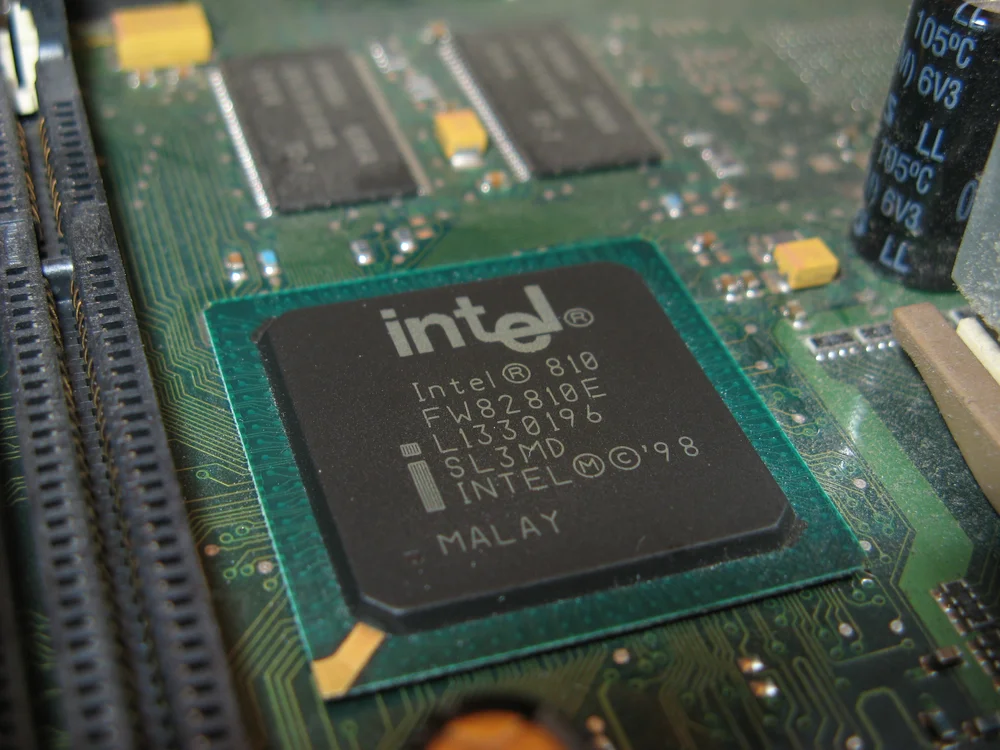
Wikimedia Commons\Intel Northridge Chipset
Computers rely on chipsets to perform their intended functionality and are often glossed over. Akin to a construction site, the motherboard is the foundation of a building, but the chipset is the framework for communication among construction workers, where workers are different PC parts.
Chipset vs CPU
Chipsets and CPUs are interchangeably used, but their uses are vastly different. A chipset is responsible for managing communication between all electronic parts, including the CPU, so they can communicate and work with each other.
On the other hand, a CPU, short for central processing unit, is responsible for executing tasks on a computer, from web browsing to gaming. Chipsets resemble a nervous system, delivering signals to different PC parts, while the CPU represents the brain of a computer, responsible for commanding various actions.
Use Cases and Where It's Found
Chipsets are an essential part of any computer. Every part in your computer, from the CPU to the GPU and even SATA devices, relies on one stable framework that can smoothly manage this communication without degrading part performance to translating different communication forms otherwise.
They are commonly found on PC motherboards but are also found in virtually any electronic device. Prominent examples include SoCs (e.g., iPhone), appliances (e.g., fridges), and gaming accessories (e.g. CORSAIR Scimitar shown above). However, their functionality remains the same across different products: managing communication between different electronic parts to serve their intended purpose.
Available Chipset Features
Chipsets offer varying degrees of performance that provide users with more control over their systems. Some improvements can include faster data flow transmission (i.e. overclocking), availability of ports (e.g., SATA, PCIe), and greater power efficiency. Often, end users will notice manufacturers adding heatsinks on their chipsets for better thermal performance. Chipset performance features vary between electronics, so end-users will need to reference manufacturers’ product specifications individually to assess what specific advantages are being offered.