There are three new Threadrippers: the 9980X, 9970X, and the 9960X. With their prices being $4,999, $2,499, and $1,499 respectively, you should know the difference in performance that justify these price variations.
AMD Ryzen Threadripper 9980X vs 9970X: Specs Compared
As always, specs are what separates CPUs from each other. If you are knowledgeable enough about these stats, then all you may need might be in this table below.
| 9980X | 9970X | |
| Architecture | Zen 5 AVX 512 | Zen 5 AVX 512 |
| PCIe Generation | PCIe 5.0 (80 lanes) | PCIe 5.0 (80 lanes) |
| Core/Thread Count | 64 / 128 | 32 / 64 |
| Clock Speed (base/boosted) | 3.22 GHz / 5.44 GHz | 4.0 GHz / 5.4 GHz |
| L2 Cache | 64 MB | 32 MB |
| L3 Cache | 256 MB | 128 MB |
| Memory | 4-ch. / DDR5-6500 | 4-ch. / DDR5-6500 |
| Default TDP | 350 W | 350 W |
| CPU Socket | STR5 | STR5 |
| Supported Chipset(s) | TRX50 | TRX50 |
If you're just looking for the top-level stuff, check out our overview article about the 9980X and 9970X.
Though if you would like a quick refresher, then a brief explanation of the Threadrippers would be that they are CPUs with supremely powerful rendering, simulating, medical modeling, and AI/ML learning power.
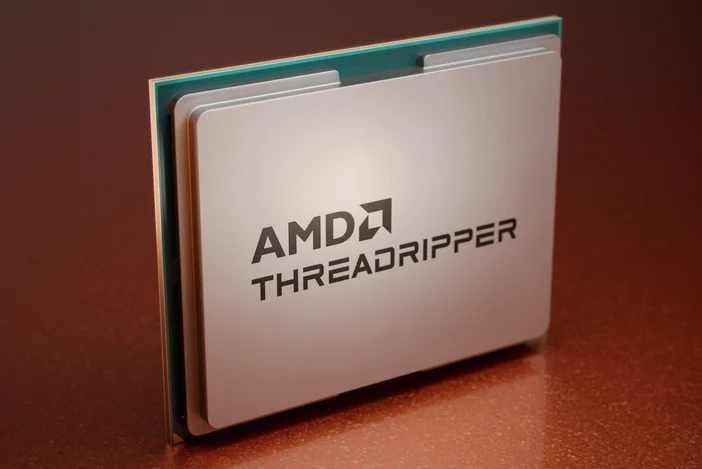
This article will focus on the differences between the 9980X and 9970X, from specifications to performance.
Specs Differences Explained
For one, the core and thread count of the 9980X is 64 cores and 128 threads, which is two times that of the 9970X with a much lower count of 32 cores and 64 threads. This means that the 9980X is significantly better for multi-tasking and parallel processing, as the cores and threads have a significant effect on these factors. More threads means more tasks being handled at once, increasing performance.
The L2/L3 caches are also significantly smaller on the 9970X, having two times less MB which are 32MB (L2) and 128MB (L3) cache sizes respectively. Having a smaller cache causes overall slower transfer speeds of all data within the PC.
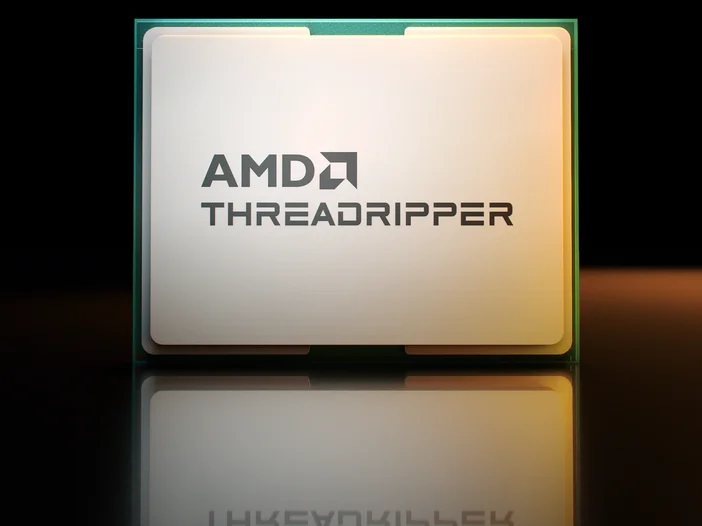
Though lower in core/thread count, the base clock speed of the 9970X is 0.78 GHz higher than the 9980X's clock speed which is a significant difference, especially considering that each GHz is approximately one billion ticks in a single second. Also, if you are boosting your clock speed, both have the same speeds as each other at 5 GHz.
Performance & Price Differences
Given these differences, the 9970X is approximately ~25% slower than the 9980X, which is significant, but the ~50% price decrease can definitely justify its purchase if you have a high budget, but don't want to spend five grand on the higher numbered model.
Though we will not go over the 9960X in this article, you can see a ~67% decrease in price from the 9970X to the 9960X, which is a significant price drop for a CPU in the same series, though the performance drops are so high that it is not worth mentioning in this article.
Also, these CPUs do tend to run hot, so it is very important to get reliable cooling so check out our Threadripper compatible coolers.
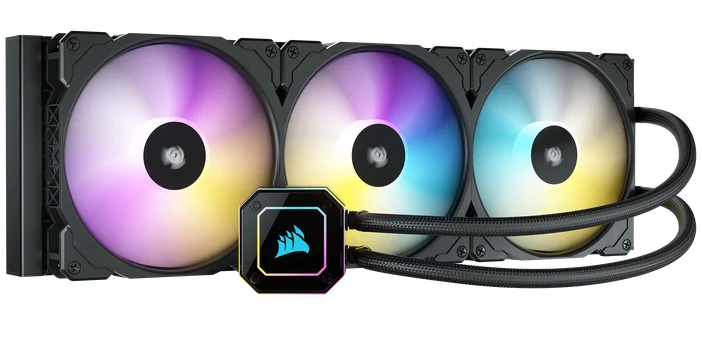
Given the previous fact that there is only about a 25% performance drop, it is correct to say that this series is not too budget friendly, the 9970X still gives three quarters of the performance of the 9980X, and at half the price for more affordability.
It is important to understand the differences between these CPUs to find the right one for you, so looking at the statistics can determine what fits your budget, performance specs, and compatibility.
In short, the 9970X is a better buy if you want both performance and a more manageable price point, though if you truly want overwhelming power and have the funds, then there is none better than the 9980X.
ENREGISTREMENT DU PRODUIT
JOIN OUR OFFICIAL CORSAIR COMMUNITIES
Join our official CORSAIR Communities! Whether you're new or old to PC Building, have questions about our products, or want to chat about the latest PC, tech, and gaming trends, our community is the place for you.