GLOSSARY
What is a Heat Sink?
A heat sink, in its simplest form, is a piece of material that sits on a heat-producing part. This material absorbs the heat from that part in order to keep the part cool.
They are usually made from a conductive metal such as aluminium or copper, and are typically shaped in such a way to maximise the surface area, hence the distinctive spiked or finned appearance.
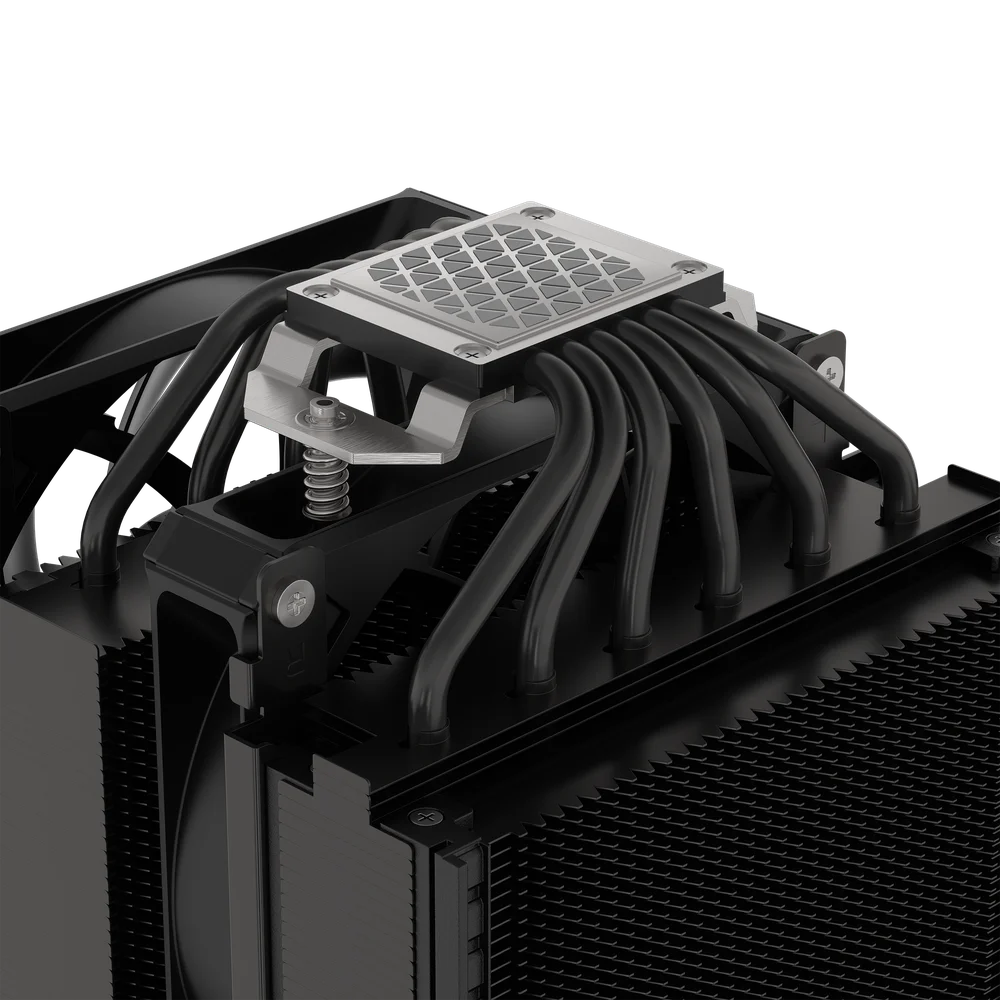
A close up of the CORSAIR A115 Air Cooler. Notice how the fins (bottom right) create a huge amount of surface area to dissipate heat. Additionally, the gray triangles are pre-applied thermal paste, which make the heat transfer more efficient.
What Devices Use a Heat Sink?
This will depend on what is being cooled. for lower power items such as some motherboard components, a simple piece of metal with a thermal interface material will suffice. Notice how the heatsink that gets clamped over your m.2 drives on your motherboard is flat, or sometimes entirely absent. (though more effective solutions are common these days, especially with PCIe 5.0 drives.)
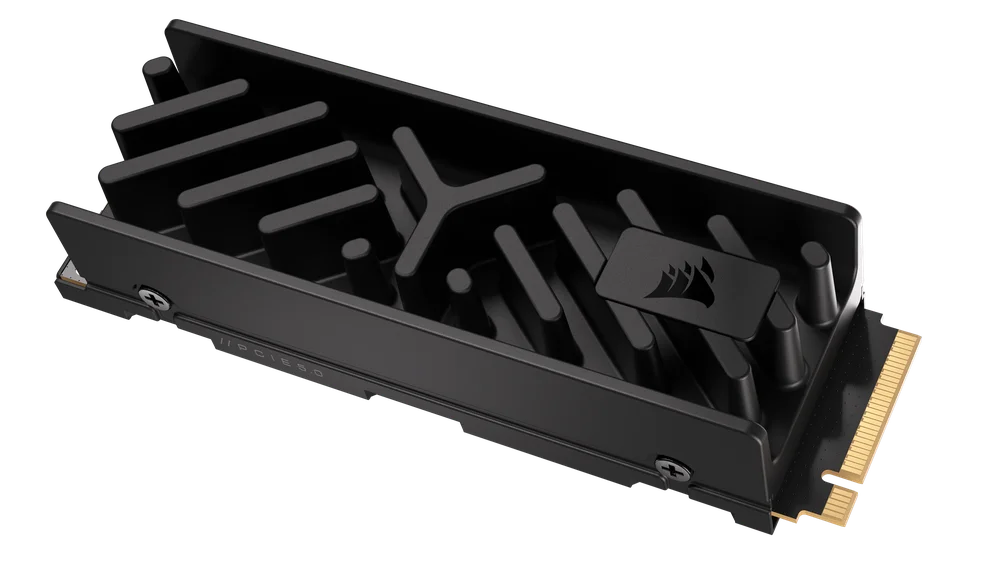
The heat sink of the MP700 ELITE. The design creates more surface area, just like the fins on a CPU cooler.
Then we move onto the more traditional finned heat sink commonly used on CPUs. For CPUs you usually see at least one fan attached to help move that heat away and help maximise the cooling. These are the tube-looking things, and on modern CPU coolers there's usually six or eight or ten of them.
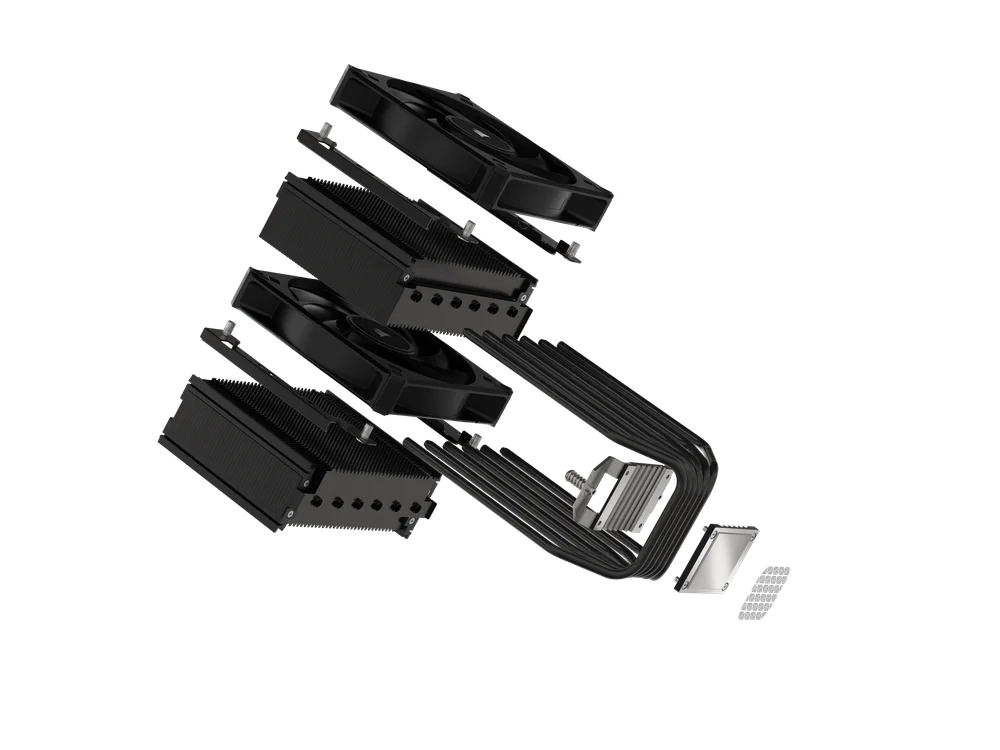
Exploded view of the A115. You can see the thermal paste, coldplate, heat pipes, the fins, and the fans.
Do I Need a Heat Sink?
Simply put, yes. Most modern microprocessors produce more heat than they have in the past, so a heat sink is required to prevent overheating. This can cause issues from throttling to shutdowns or in some instances, continual overheating can permanently damage the processor. A heat sink is vital for safe operation of the device and will help prolong its lifespan.
Does Water Cooling Use a Heat Sink?
Yes, the concept of a heat sink is to move heat away from its source, which is exactly what water cooling helps to facilitate. In this case however, the radiator(s) act as the heatsink and are position away from the CPU and mounted to case so the fans have easier access to fresh air.
PRODUCTS IN ARTICLE